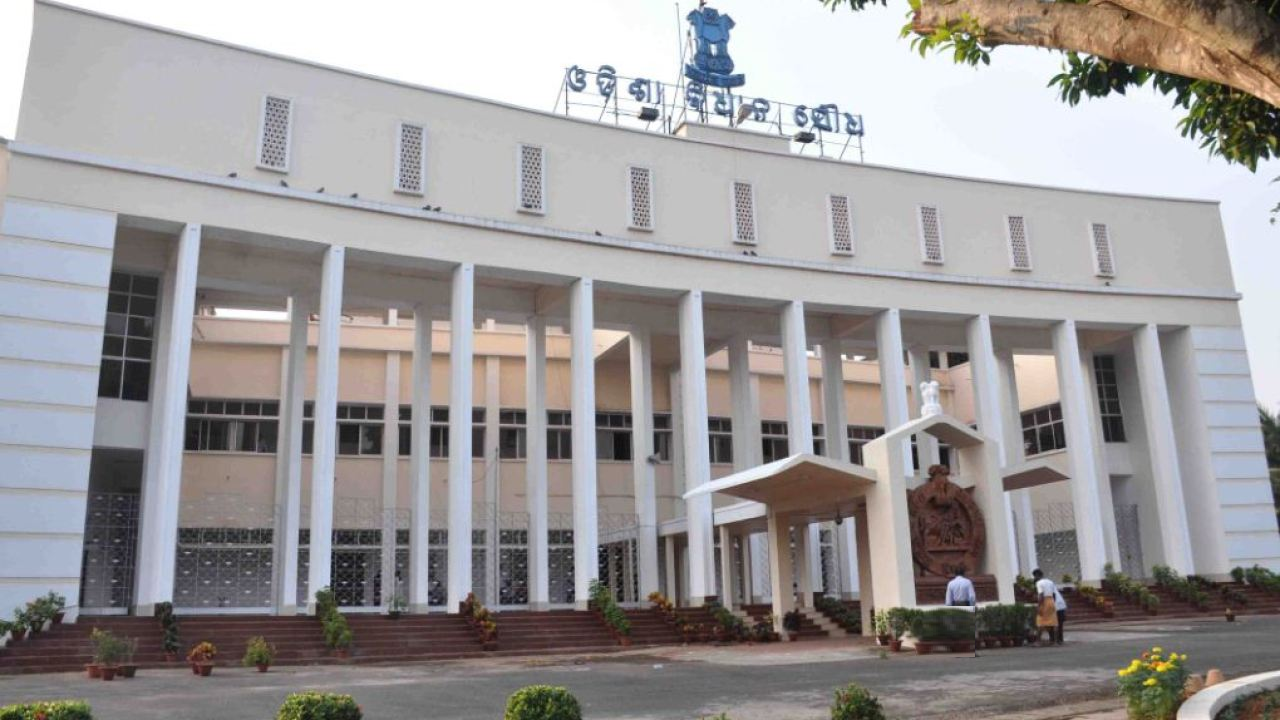
The Odisha Development Authority (Amendment) Bill-2026 has been passed in the Odisha Assembly. Through this, the path has been paved for the formation of an Economic Region Development Authority (ERDA) in the state.
The purpose of this provision is to prepare an integrated development plan for big cities, small towns and rural areas. The Chief Minister will be the chairman of each Economic Region Development Authority. The Minister of Housing and Urban Development will be the deputy chairman. Plans will be prepared for land use, transportation and infrastructure development by maintaining coordination between various government departments and local self-government bodies.
There is a proposal to form an economic region for Bhubaneswar-Cuttack-Puri-Paradip. According to the Developed Odisha Vision-2047, there is a plan to form such an authority in Sambalpur, Koraput, Berhampur and other areas in the future. The new provision can create opportunities for regional development and administrative coordination.
However, issues such as centralization of power, autonomy of local bodies, financial resources and land management are also important. The positive aspect of the new system is integrated development. There will be an opportunity to prepare integrated plans for cities and villages without confining development within administrative and geographical boundaries.
Similarly, under the Economic Region Development Authority (ERDA) coordination between land use and infrastructure construction can help prevent uncontrolled urbanization. Planned infrastructure development can help create employment opportunities along with investment in industry, trade and service sectors.
Increased coordination between various government departments and local bodies can reduce delays in project implementation. An integrated transport system can make it easier for rural people to get employment, education and healthcare.
If economic regions are formed in western and southern Odisha, there will be an opportunity to reduce the inequality in regional development. However, if more power is centralized with the new authorities, there is a risk that the autonomy of panchayats and municipal bodies will be affected.
If the scope of work of the existing development authority, municipal bodies and the new authority is not clear, administrative complexity may arise. Additional financial resources may be required for the new administrative structure, human resources and infrastructure projects. If land acquisition is required for development projects, fair compensation, rehabilitation and livelihood security may be major challenges. Due to the increase in land prices in the new economic areas, housing may be expensive for the low and middle income groups.
There is a risk that agricultural land, forests, water bodies and natural drainage systems will be affected due to the expansion of urban areas. If government expenditure and investment are concentrated in a particular economic area, the development of other areas may be affected. It will be necessary to ensure the participation of local public representatives and the general public in the decision-making process of the new authority.
The effectiveness of the new system will depend on the authority’s capacity, scope of work, financial resources, coordination with local bodies and public participation. A clear picture of its impact will be available after the regulations and actual implementation.