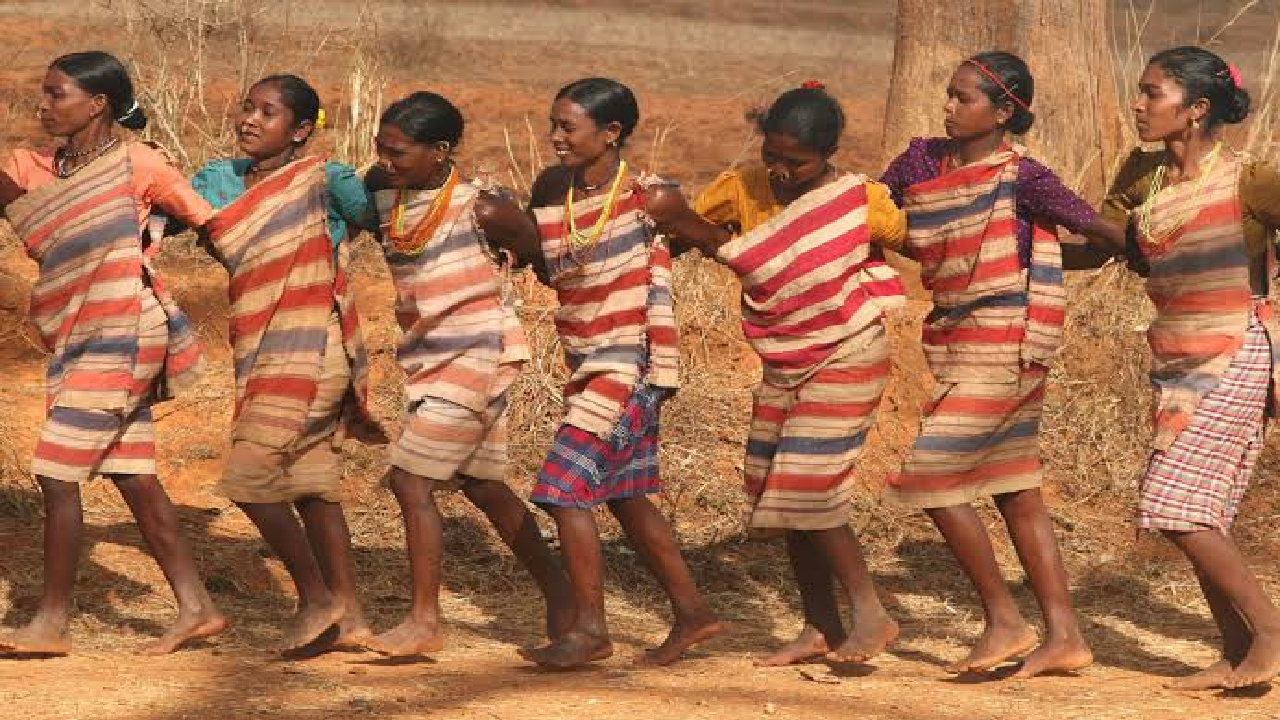
Odisha, a State along the eastern coastline of India still boasts of a culture, tradition and ritual where 62 tribal communities exhibit not just their individual cultural identity but live in harmony with nature.
These indigenous festivals are instrumental in establishing unity among communities while celebrating nature and harvesting and divinity.
Here is a list of the famous tribal festivals of Odisha
Chaita Parava
in the month of Chaitra, ( march -April) the tribal people in the District of Koraput observe this festival,not only here, the Bhuiyans,a hindu tribe found in Sundargarh, Keonjhar, Mayurbhanj, Sadeikhala, Kharsuan observe this festival with great zeal and fervour.
This entire season is one of festivity, women of all ages sing and dance,while the men go hunting, the kill is shared. The nights are spent in revelry, drinking, singing and merry making.
Sume-Gelirak Tribal festival
Living in seclusion on hilltops, the Bondas of Koraput are an interesting primitive tribe. This tribe is rather insular and restrictive in its interaction with other tribes. This festival is sought after by the young crowd as it gives them a lot of freedom.
Sume-Gelirak starts on a Sunday and continues for ten days. In the initial phase their Gods and even Demons are worshipped. The propitiation is done by Sisa (the priest) who offers liquor, animal and bird sacrifice to ward off evil.
The next phase is the singing and dancing where the young folks are free to choose their mates. The most important part of the festival is “castigation”, where the young and old, boys and men beat each other severely with branches wounding the other till the Sisa bids them to stop, he then delivers a lecture on friendship and good behavior, he makes them hug and bow before each other touch their feet and start dancing to the drum beats.
Bija Pandu festival
In Malkangiri sub-division of Koraput, the Koya tribes celebrate the Bija Pandu festival. The villages are situated in clearings in the midst of deep jungles. In each of the villages there is a” Bijigudi ” or house of God.
‘Gudimata’ or ‘Bhumu’ Goddess Mother Earth is the reigning deity. Liquor and animal sacrifice is given as offerings. The festival gets its name from the sacred seed ‘beej’.
During the celebration the men go out in groups to hunt and fish returning before dark, while the women dance and sing waiting for their partners to return. Once the men are back, all unite. There’s convivial dancing, singing and drinking. They dance in circles singing songs of love.
Interestingly the men wear richly decorated bison horns fitted with cowries (shells) and peacock plumes,while women wear brass caps and hold sticks with bells which tinkle along with their dance steps.
Kendu Festival
A very large tribal group is that of the Kondhs, concentrated mainly in Phulbani, and some districts of Ganjam and Koraput in Odisha. Kendu Parab is a very important festival for them.
The rituals are spread over five days and are very prescriptive, each day is marked out for a distinct ritual. The significance and purpose is to propitiate Mother Earth, who in return would bless them with a bountiful yield and bumper crop.
Maghe Parab
The Oraon, Kisan, Ho, Kol and many other such tribes of Odisha observe this festival with great devotion. This observance is to appease and honour the village Goddess (Gram Deboti) who in return would protect them from ill luck, calamities and bestow good fortune on the people.
A black fowl is sacrificed and offered to the goddess along with Mahua liquor. Dancing together, singing and drinking alcohol, are the highlights of the festival.
Two other important festivals are ” ‘Damurai Parab’ observed in summer and ‘Horo Parab’ celebrated during the rains.
Thus it is seen that the famous tribal festivals of Odisha are deeply tied to nature, traditions and harvesting. These communities of Odisha with their indigenous cultures display a variety of beliefs, attires, language and oral traditions each. The festivals are so unique that it offers a rare insight into ways of life closely liked and shaped by earthy, pure and close connection with land, nature and ecology.