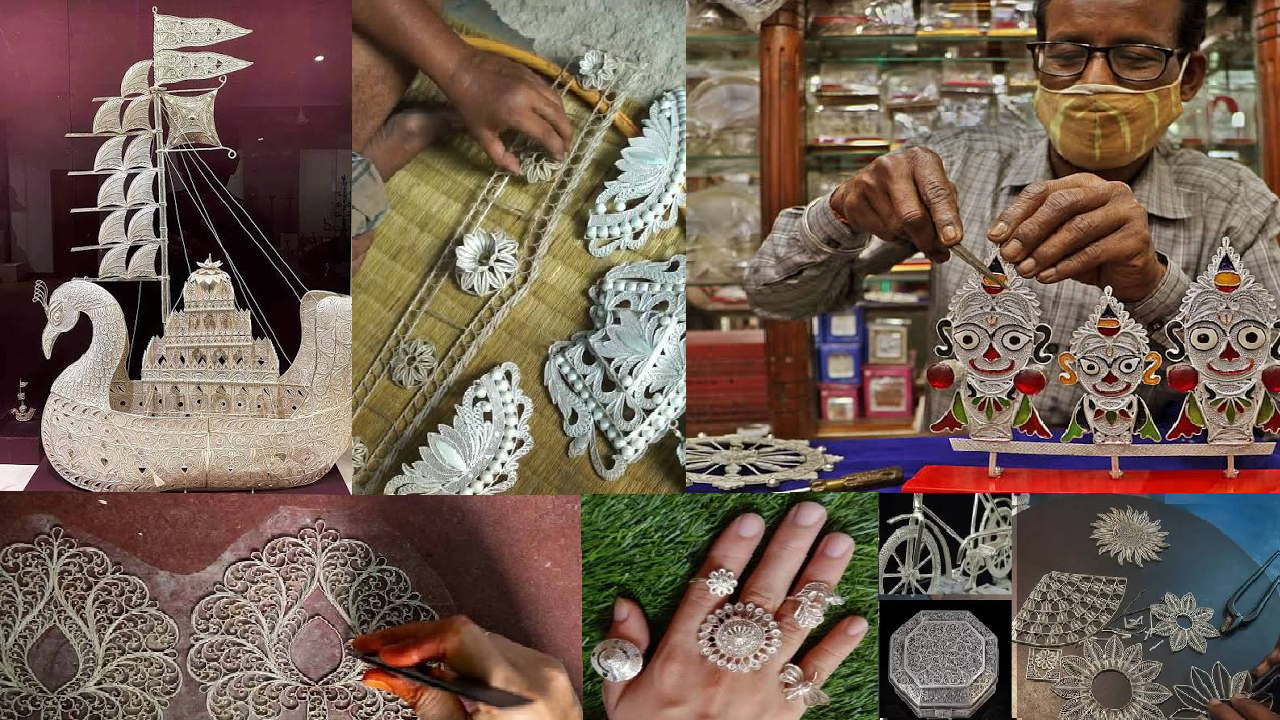
Silver Filigree is a delicate handicraft made with silver threads, intricately woven into different types of shapes like flowers, animals and other elaborate forms.
The English word ‘filigree’ is derived from a latin word “filum” which means thread and “granum” which means a grain or in this case a small bead. This form of art came into existence 5000 years ago first in Greece. At some point of time it reached India and was first seen in Odisha and Andhra Pradesh.
Some of the finest works can be seen in Cuttack, Odisha. This art form was encouraged by the Mughal Emperors dating back to the 12th century, though the exact year of its origin is unknown. The art underwent changes with passing years and under different rulers.
Silver filigree in Cuttack thus got recognition world wide for intricate and exquisitely delicate craftsmanship and was given the prestigious GI (Geographical Indication) tag. The lace like design makes it stand apart from the silver designs found in other parts of the Country.
In Odisha, silver jewelry is an undeniable part of its culture and tradition. Bridal ornaments are incomplete without a few pieces of filigree jewelry like armlet, the waistband and most importantly the anklet and the toe rings which are the symbols of a married woman.
When a child is born, gifts made of silver are usually given as silver is considered to be auspicious. This filigree work is called “tarakasi” where ‘tara’ means wire and ‘kasi’ means the design. In Kataka this form of silver craft has been prevailing since 500 years. This is the reason why Cuttack is known as the ‘silver city’.
Nearly 2000 artisans who create wonderful articles from silver, live in this city. They have learnt the tarakasi work from their forefathers who have passed it down through generations.
The tarakasi work is done especially by beating silver into thin threads or wires which are then moulded into various shapes which include ornaments, animal figures, boxes, scene from Mahabharata for example the chariot carrying Arjuna with Lord Krishna as the charioteer, images of Lord Jagannath and his siblings ,ships which are symbolic of Odisha ‘s maritime past and other attractive articles which are fancied not only by the people of India but are in great demand abroad.
The filigree items are regularly exported to many foreign countries. The ornaments worn by the Odissi dancers are designed by these artisans who make filigree jewelry especially the waist band and the head gear have a unique style and have very exclusive filigree design.
Artisans have made replicas of Taj Mahal ,the Konark Temple and the Konark wheel using filigree work which are highly popular gifting objects for dignitaries especially.
Silver Filigree And Cuttack Durga Puja
Silver Filigree Handicraft is also used in Kataka’s famous Durga puja. Entire filigree work is used to prepare the backdrop of the idol of Goddess Durga and also the idol is adorned with beautiful silver ornaments, which sometimes costs upto Rs. 40 crores.
Such is the popularity of filigree work in Kataka. Long hours of hard work is involved in creating these tarakasi backdrops. This spectacular magic in silver is much appreciated by visitors and devotees alike.
However it is a sad reality that in today’s fast paced digital world, a world which believes in machines made products, this art in all probability is dying a slow death. The workers are most of the time under paid except for the Durga puja season, which comes once a year.
The time and labour to produce a filigree object deserves better wages than what the owner of a silver filigree shop or factory, can afford to pay his workers. As a result many are looking for better options to earn their livelihood.
The Government support to the artisans is negligible. The promise made by the Government to open centres to promote this art has not moved beyond paperwork. All this creates a very dismal picture. Thus it is absolutely necessary to give a wake-up call to Government agencies to approach this issue with a more sensitive understanding and support the cause of the dwindling artisans of this wonderful craft in Kataka, Odisha.