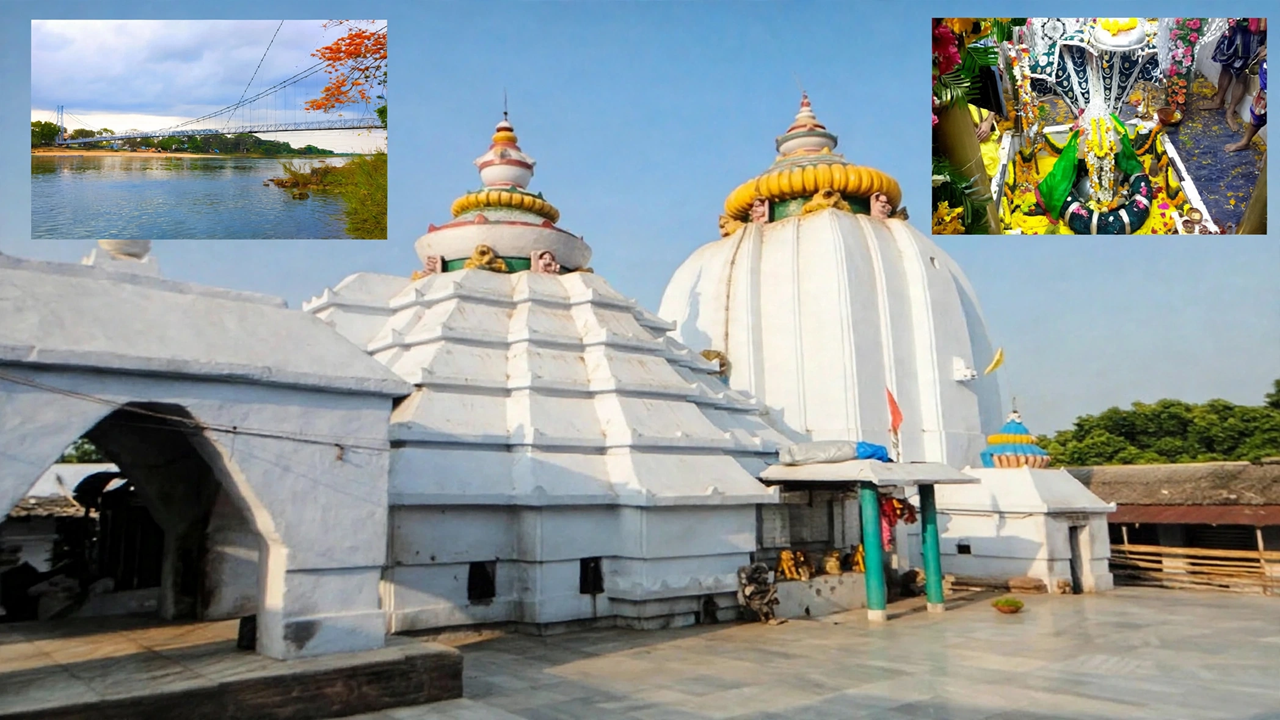
This temple, dedicated to Lord Shiva, is located on an island in the middle of the Mahanadi River, approximately 27 kms from Cuttack, Odisha. The temple was constructed by King Jajati Keshari, who belonged to the Somavamshi Dynasty. It was later renovated by the Kings of the states of Athagarh and Khurda.
Legend Behind The Name Lord Dhabaleswar
There is an interesting legend behind the name ‘Dhabaleswar’.
According to the legend, once a thief took shelter inside the temple after stealing a black calf from a nearby village.
In order to escape from the angry crowd he prayed to Lord Shiva to protect him. Shiva took pity on him and came out of the temple in the guise of a sanyasi. He asked the crowd the reason for their anger. When they told him about the theft and the black calf, Shiva brought out a white-coloured calf.
This convinced the people that they had made a mistake and they decided not to catch the man hiding inside the temple. Later the thief realized that he had been protected by the sanyasi who was none other than Lord Shiva himself by changing the black calf into a white one.
This made him repent and he confessed to the villagers and took an oath to give up his wrong deeds and remain as a servitor in the temple, all his life. From that day onwards the name Dhabaleswar was given to the temple — ‘dhabala’ meaning white and ‘eshwar’ meaning God.
The Architectural Pattern Of Dhabaleswar
The temple is surrounded by calm, serene beauty and can be reached by a suspension bridge which adds to the picturesqueness of this temple. The architecture of the Dhabaleswar temple is of the classic Kalinga style with stone carvings of 10th and 11th century CE.
Each piece of sculpture has a story to relate and whispers of timelessness can be heard by those who have the ear to hear. Just like other famous temples like the Lingaraj temple in Bhubaneswar and the Jagannath Temple in Puri, this temple also has a Pindha Deula (the commodities hall), a Garbha griha (the shrine) and the ‘Rekha deula (upper shrine).
The temple is surrounded by a raised platform built of white marble with shops selling stuff required for different types of puja. The temple walls are elaborately decorated with stone carvings of different Gods and Goddesses. The calmness of the island provides pilgrims an ideal location to immerse themselves in the peaceful atmosphere of the temple and its surrounding.
It combines spiritual fervor with artistic excellence. The tranquility of the place helps people to forget the stress of everyday life and relax in the midst of nature.
Religious Fairs And Celebrations of Lord Dhabaleswar
Every year, various religious celebrations like Shivaratri, Dola Purnima, Kartika Purnima and similar festivals are observed with lots of enthusiasm and fanfare. The island comes alive with vibrant colors and joyfully sung songs.
As the temple is built on a hillock in the Mahanadi River, the only way to reach it was by boat. Later a more interesting way to cross over the Mahanadi river was the construction of the famous ‘Jhula Polo’ or the hanging bridge.
This suspension bridge was built in the year 2007 which connects Mancheswar with Dhabaleswar. It is a foot bridge, 245 mts. long and 2mts. wide. The river crossing experience is unique by itself whether by the boats or by taking a stroll on the swinging bridge feeling the rhythmic swaying of the bridge under you and hearing the sound of the clanking chains, which hold the bridge.
The temple and the vast Mahanadi River combine to form an unforgettable picture of the mighty face of nature and the divine grace of Lord Shiva .
The Dhabaleswar temple is thus one of the most attractive pilgrimage spots for both devotees and tourists alike. Another unique feature of this temple is that it symbolizes protection and forgiveness of sin as seen in the legend of the thief.
The temple has a special significance during the Kartika month which culminates with the Bada Osa festival and Kartika purnima.
Thus the Dhabaleswar temple is not only seen as a place for religious worship but a getaway for people seeking peace and tranquility.
The vastness of the Mahanadi makes one realize the littleness of our existence. This temple stands as a silent witness of the changing times and continues to be a spiritual landmark for the people of Cuttack.